

Supplier Partnerships
TPI: People
From the community, for the community — a family business which understands that by nurturing your community, you nurture positive impact
TPI is a family business, established in 1980 by Brij Mohan who started out working in the tea gardens in Darjeeling, before forming a union then becoming a supervisor, followed by manager. With TPI and working closely with his son Binod, he pioneered FLO Fairtrade standards, proudly becoming the first business in India to achieve Fairtrade certification. Today, Brij’s grandson Gautam Mohan is the Managing Director of TPI, with his wife leading social initiatives through the Tea Action Project — a non-profit organisation founded in 1995 with the intention of working closely with tea farmers and workers in India to make tea trade a vehicle for positive social and environmental transformation.
Tea Action Project
Tea Action Project is a non-profit organisation that works alongside TPI to inspire conscious tea consumption by growing tea responsibly and supporting tea communities. Their projects work across areas of health, education, sanitation, wildlife conservation, climate change and sustainability.
Click on the thumbnails below to learn more about TPI’s work in conjunction with Tea Action Project in their beautiful annual publications.
Community Projects
TPI are FLO Fairtrade pioneers and demonstrate perfectly how Fairtrade premiums positively impact tea growing communities. As the workers themselves lead the committees, the community’s ideas guide decision making, which TPI then support to come to fruition. Social entrepreneurship and income diversification is nurtured by TPI, by providing tools, training and resources to grow herbs and vegetables, weave baskets and extract honey from tea garden apiaries. Of the community-led initiatives that TPI are bringing to life, one such Fairtrade project is the distribution of cows to the tea workers — this not only provides families with fresh milk but also an additional source of income through selling cow urine and dung, which is used in composting as a valuable fertiliser for the tea bushes.
In addition to community-led Fairtrade projects, TPI have funded many intiatives to support the lives of the workers. Below are some examples:
- Elephantea! — conducting awareness programmes, reducing safety risk for elephants, created safe pathways for them and prohibiting the use of firecrackers.
- Safe Sanitation Project — building two environmentally friendly toilets in Chardwar.
- Small farmer projects — enabling ownership of the farmer’s own tea and provide access to a market though their factories.
- Stipends and scholarships — TPI pay stipends to encourage bright students and fund scholarships for students wanting to pursue further studies.
- Built a High School to meet the requirements of the tea workers on the farms.
- Hepatitis B vaccination — a specialised drive was conducted to get all children vaccinated for hepatitis B.
- Sport and cultural activities — TPI encourage inter-farm football tournaments, picnics and outings, musical shows, and cultural exchanges in the community.
- Medical dispensary — thanks to our contribution following struggles during COVID, TPI were able to build more beds, toilets, a larger outpatient room, refrigerators for vaccinations and a dispensary fully equipped with medicines.
- Large solar array — a project installing solar panels of roofs of tea workers’ homes to provide them with electricity.
- Solar lighting — all villages across the TPI gardens have been equipped with solar lighting. Introduced a few years ago, this initiative demonstrates TPI's ongoing commitment to renewable energy sources.
Women
Gender equality and women’s empowerment is important to TPI. Not only do they offer roles to women that are typically held by men in the tea industry in India, but they also celebrate the women that work with them and give them a voice through membership of the Fairtrade committees and by empowering them to attend conferences as representatives of the business.
The Fairtrade premiums that we pay to TPI have contributed to some of the incredible initiatives that they’ve put in place to enrich the lives of their female workers. These include:
- Women’s workshops
- Safety and self-defence — legal rights, domestic violence, marital abuse helpline numbers to call in case of an emergency, and basic self-defence
- Entrepreneurship and income augmentation
- Mindfulness — workshops for stress management
- Pre-and post-natal health — in partnership with specialised agencies, TPI organised healthcare and hygiene workshops with special focus on pre- and post-natal health of women tea workers.
- Menstrual hygiene — in 2022 they distributed 4157 packets of reusable cloth sanitary napkins to all their women workers. Men were also educated and involved in the project.
- Bicycles — provided to female workers for independent travel to work
- Creches — to provide childcare enabling women to work
“A happy and healthy community is not a fairytale. All you need is a seed.”
TPI’s recognition of the community’s involvement in the success of their tea gardens reflects their belief in interconnectedness and is a testament to their ethos, consciousness, and determination. By empowering the community, with resources, education, and ownership — through smallholder farmer models — TPI challenges traditional top-down structures and embodies commitment, care, and quality.
Click here to learn more about how TPI cultivate their tea gardens for optimum tea quality and yield, and to nurture biodiversity.

Elephants roaming through TPI gardens
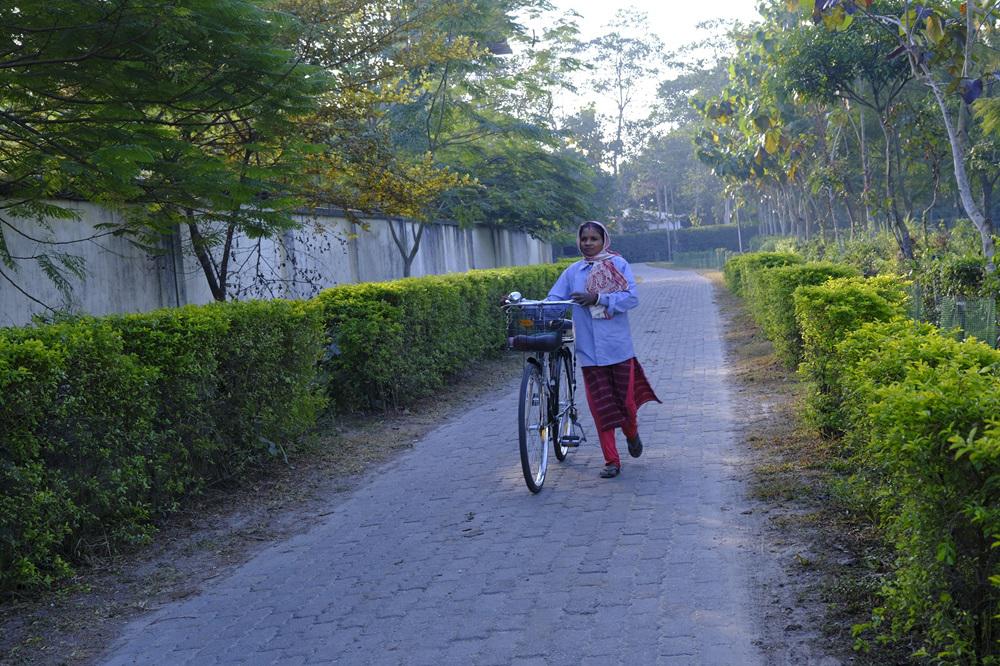
Female worker with the bicycle provided by TPI
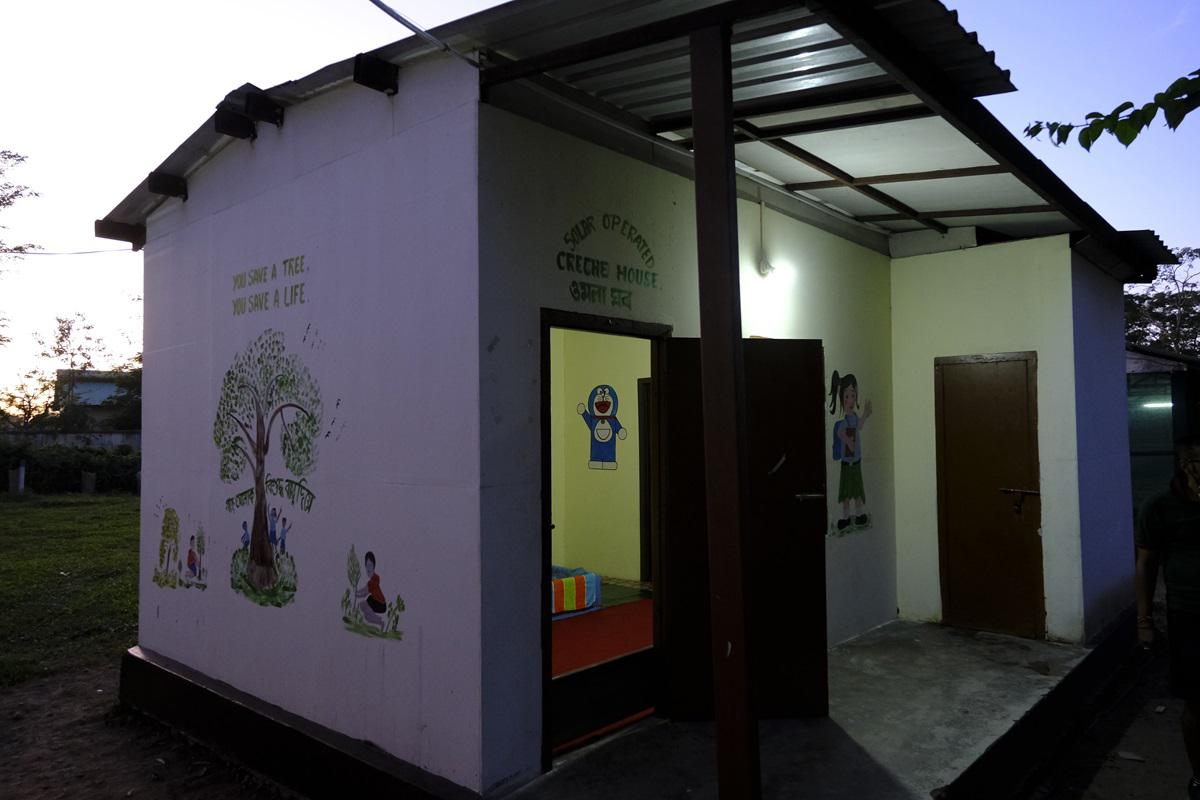
A tea garden creche built using Fairtrade premiums
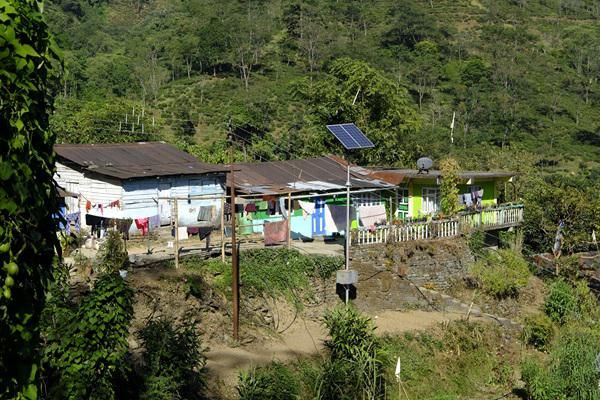
An image of solar lights that have been put in every village across the TPI gardens
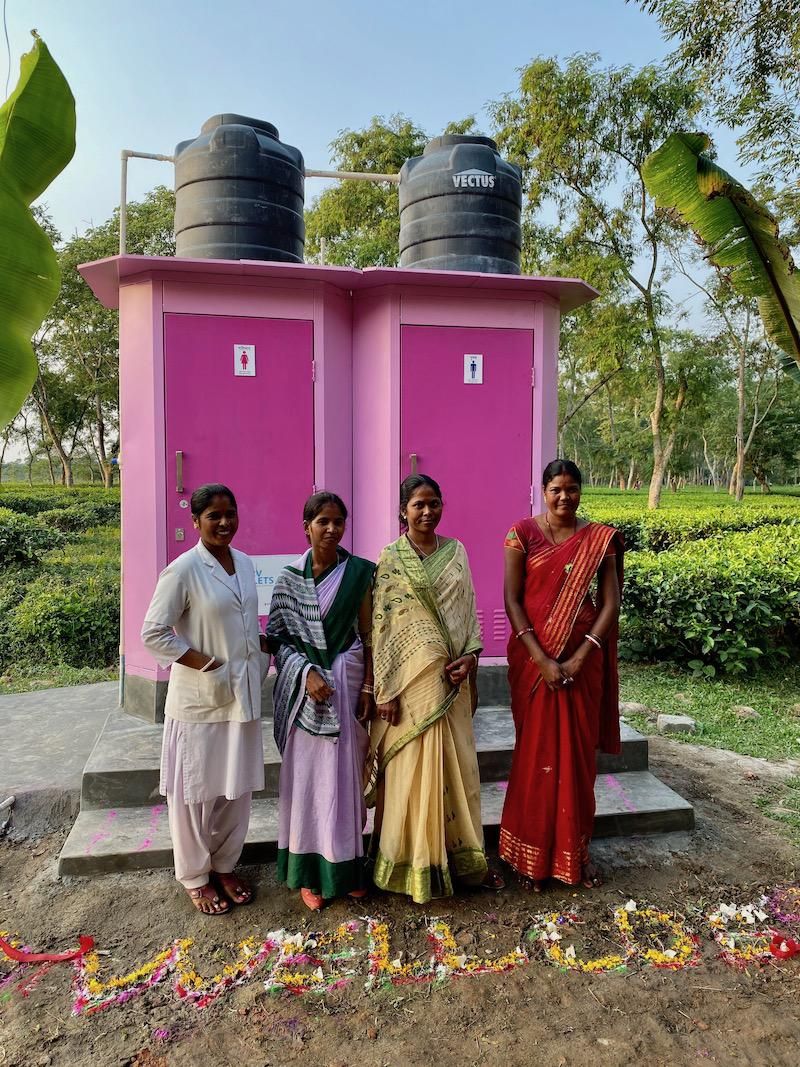
The two environmentally-friendly toilets build in the Chardwar tea garden