

16 December 2024
Product news
Plants as food & medicine: Oregano
Over the past couple of months, we have been blending, tasting and developing our new organic Italian Herb Mix — containing Oregano, Marjoram, Basil, Thyme, Sage, and Black Pepper.
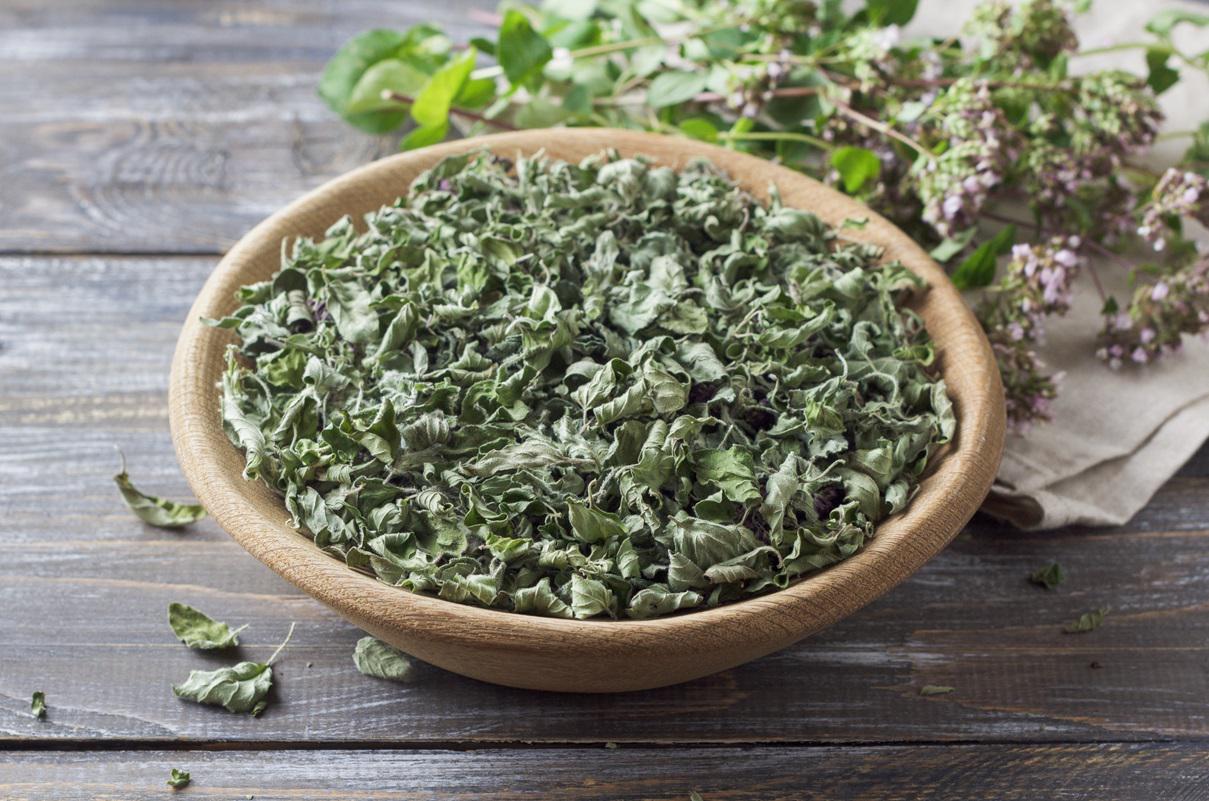
Dried Oregano leaf
Amidst our exploration of flavour, we discovered the rich history of culinary and medicinal use of the blend’s star herb, Oregano.
Oregano (Origanum vulgare), or wild marjoram, is a member of the mint family (Lamiaceae) native to Europe and western Asia. Imbuing its native Greek hillsides with its verdant green, this sprawling perennial earnt itself the name ‘joy of the mountains’ or Origanum, from ‘oros’ — mountain, and ‘gamos’ — joy. Old tales also tell of the goddess Aphrodite creating the herb with a scent “to remind mortals of her beauty” and to grow in her garden as a symbol of joy and perpetuity. Owing to Aphrodite, Oregano entered tradition in crowns to adorn newlyweds to bless their marriages with merriment, and found growing on graves was thought to symbolise the happiness of the departed in the afterlife.1
In Ancient Greece, Oregano had a plethora of uses as medicine. Perhaps the most interesting Ancient Greek medicinal use of Oregano is as an antidote to poison. This application was supposedly inspired by Aristotle’s observation that tortoises, after eating a snake, would seek out and eat Oregano, to prevent their death.2 Similarly, shepherds would allow their sheep to graze on Oregano, as they believed it would protect them from otherwise fatal snake bites. Writings of Hippocrates, an Ancient Greek physician known as the ‘father of modern medicine’, dating back to 4th century BC details a myriad of internal and external applications. Fomentations (cloth soaked in a hot infusion) and infused oils would be applied topically to relieve muscle spasms, pain, and rheumatic joints.1,5 With an affinity for the respiratory system, Oregano was also used for coughs, colds and other lung conditions, which still aligns with modern herbal practice.5
Like many members of the mint family, Oregano is aromatic, owing to the presence of volatile oils — namely thymol and carvacol — which bestow the leaves with antibacterial, antifungal, and antiseptic properties, offering therapeutic support to the immune system against infection.6 Warming, pungent, and earthy, Oregano has a mild bitterness that makes it both a delicious and medicinal addition to any meal to support digestion and the microbiome.5
From Greece, Oregano was adopted by the Romans, delighted by its taste and the ease of its cultivation, thriving in poor soils with little maintenance. As such, its use spread across Europe and into North Africa, and Oregano found its place in Mediterranean cuisine which remains to this day.3 The robust flavour of this warming herb makes it a fragrant addition to Italian cuisine, where it is commonly used in pasta sauces, pizzas, salads, and meat and fish dishes.
Neighbouring the lands of its etymological and medicinal heritage, our organic Oregano is grown in the Aegean region of Turkey. In organic farming, Oregano is appreciated as a companion plant, as it attracts pollinators, including ladybirds which are especially helpful to manage aphid populations.7 Favouring dry conditions, Oregano also grows well alongside Thyme, Marjoram, and Sage, herbs also found in our Italian Herb Mix.7,8
Hippocrates is attributed with the phrase “Let food be thy medicine and medicine be thy food”. Though the quote’s origins aren’t truly Hippocratic, since antiquity the relation between food and medicine has been recognised, and Oregano’s prolific use and appreciation in culinary and medicinal practices throughout the Mediterranean and beyond exemplifies how people have used plants for millennia to promote health and still do to this day.
You can find our Organic Italian Herb Mix here, or dried Oregano Leaf here. If you’d like to speak to our Sales Team about these products or other requirements, you can contact them here.
References
-
Grieve, M. (2024). A Modern Herbal | Marjoram, Wild (Oregano). Botanical.com. https://botanical.com/botanical/mgmh/m/marwil20.html
-
Inkwright, Fez (2020),?Folk Magic and Healing: An Unusual History of Everyday Plants, London: Liminal 11 Press.
-
Meyers, M. (2005). Oregano and Marjoram: An Herb Society of America Guide to the Genus Origanum. The Herb Society of America.
-
Herbs in History: Oregano. (n.d.). www.ahpa.org. https://www.ahpa.org/herbs_in_history_oregano Chevallier, A. (2001). Encyclopedia of medicinal plants. Dorling Kindersley.
-
Oregano - Herbal Reality. (2024, September 10). Herbal Reality. https://www.herbalreality.com/herb/oregano/
-
Oregano - Earthsong Seeds. (2024, November 21). Earthsong Seeds. https://earthsongseeds.co.uk/shop/herbs/oregano/
-
The. (2022). Your Guide To Companion Planting Herbs & Combinations. The Organic Garden Co. https://www.organicgardenco.com.au/blog/helpful-tips-for-your-garden/your-guide-to-companion-planting-herbs-combination/?srsltid=AfmBOopQoSd-qz5eggjNxLPzDTA34ByGV_WVWh-TnMJ_FRoCniFiZ60-
-
Oregano. (n.d.). www.rhs.org.uk. https://www.rhs.org.uk/herbs/oregano/grow-your-own