

21 October 2024
Tips from the herbalist
Plants as medicine: Lemon Balm
Easily cultivated, Lemon Balm is found worldwide and in many gardens across the UK — as well as our herb field here in Somerset.
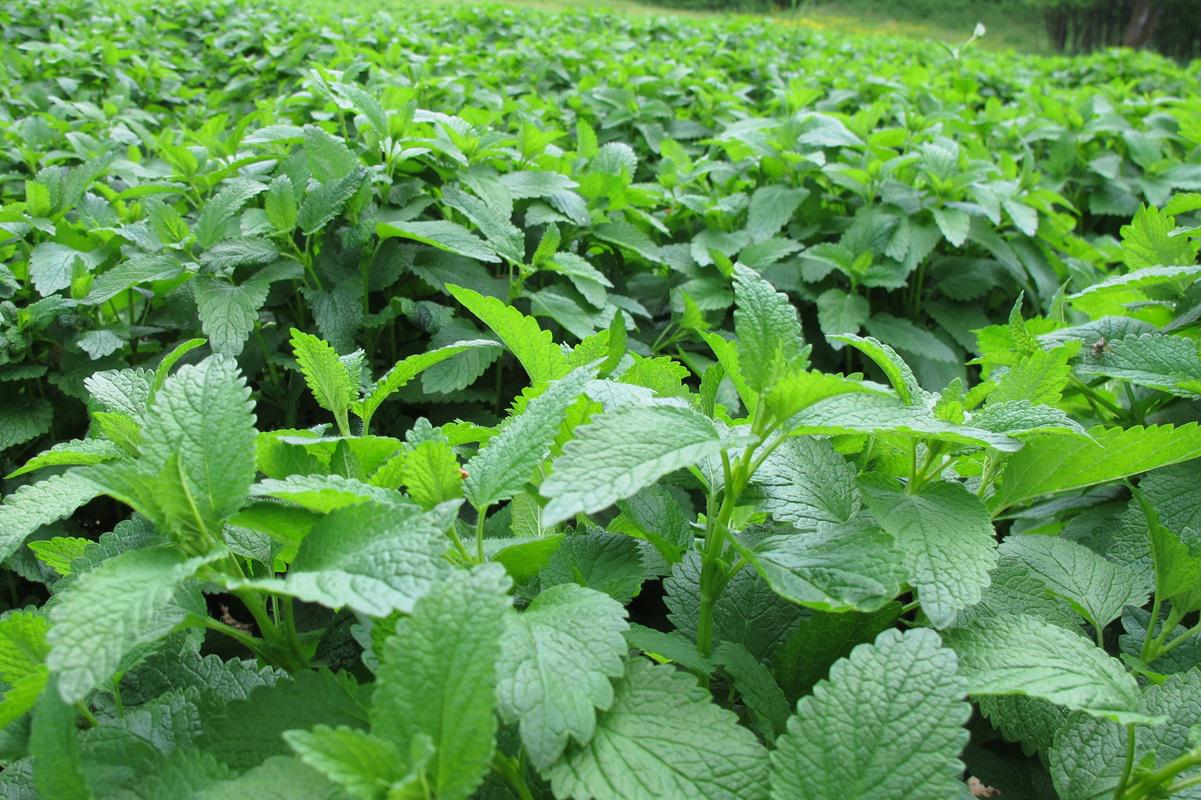
Lemon Balm (Melissa officinalis) is a member of the mint family (Lamiaceae) native to southern Europe. Melissa is Greek, meaning ‘honeybee’, and the herb has earnt its name as the bees are so fond of it. Owing to the myriad of virtues of this lemon-scented herb, Lemon Balm has been used as medicine for hundreds of years.
Nicholas Culpeper was a herbalist, physician, botanist and astrologer of the 17th century, known for making medical knowledge available to the public by translating Latin texts that were only accessible to educated doctors, into English.1 Culpeper went on to translate many more texts and write books of his own, and as he himself was prone to melancholia, his subsequent publications included many remedies for clearing melancholy that resided in the heart.2 Lemon Balm is one of them, for which he said the following,
“… it causes the mind and heart to become merry, and revives the heart, faintings and swoonings, especially of such who are overtaken in sleep, and drives away all troublesome cares and thoughts out of the mind, arising from melancholy or black choler; which Avicen also confirms. It is very good to help digestion, and open obstructions of the brain” — The Complete Herbal, Culpeper3
Today we would call Lemon Balm a nervine — a herb that acts on the nervous system (see our article, Nervines) — but nerves were a late addition to the anatomical understanding of the body, so preceding that Lemon Balm was understood to be a herb for the heart. Lemon balm would have been described as a cordial, from the Latin cordialis meaning ‘of or from the heart’. An 18th century recipe combines Lemon Balm with Motherwort (Leonorus cardiaca) and Borage (Borago officinalis), to make a remedy to inspirit hearts hardened by grief and overwork.2 With an affinity for the nervous and digestive systems, Lemon Balm is used by modern herbalists to treat emotional and gastrointestinal conditions. As an antiviral, Lemon Balm is also used for viral infections. 4
Like many members of the mint family, Lemon Balm is aromatic, owing to the presence of volatile oils in the leaves. As such, preparations of Lemon Balm tend to use the fresh herb, to capture this essence. Lemon Balm may be taken as a tea, tincture, syrup or glycerite, and can be found as an extracted essential oil that may be added to baths or oils for massage. The fresh herb tea is especially delicious, and owing to Lemon Balm’s cooling energetic qualities, it is particularly enjoyed on a warm day, or when experiencing fever or hot flushes.
References
- Petch, E. (2015, February 27). Nicholas Culpeper and his herbal | Kew. Www.kew.org. https://www.kew.org/read-and-watch/nicholas-culpeper-and-his-herbal
- Hedley, C., & Shaw, N. (2023). Plant Medicine. Aeon Books.
- Culpeper, N., & E Sibly. (1810). Culpeper’s English physician ; and complete herbal ... : Illustrated with notes and observations, critical and explanatory. J. Adlard For The Proprietor.
- Lemon Balm. (n.d.). Herbal Reality. https://www.herbalreality.com/herb/lemon-balm/